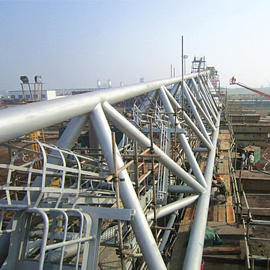
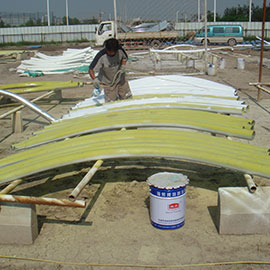
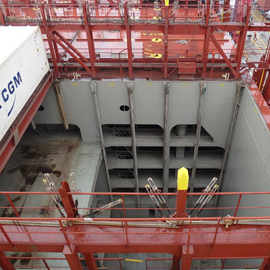
The marine environment is harsh, with ships constantly exposed to high salt, high humidity, high temperatures, and intense ultraviolet conditions, which can easily lead to corrosion problems, affecting structural strength and navigation safety. Therefore, using high-performance ship anti-corrosion coatings is a key measure to ensure the safety of the ship's structure and extend its service life. These coatings are not only protective layers but also a core component of the entire lifecycle management of ships.
Strong Anti-Corrosion Properties
The primary task of ship anti-corrosion coatings is to prevent seawater, salt spray, oxygen, and chemical pollutants from corroding the metal hull. The coating should maintain long-term stability under extreme conditions such as humidity, immersion, and alternating hot and cold.
Good Adhesion and Flexibility
To ensure protective effects, the coating must adhere tightly to the steel substrate surface and have a certain elasticity to cope with minor deformations of the hull caused by temperature or pressure changes, preventing cracking and peeling.
Wear Resistance and Impact Resistance
The ship's hull is frequently subjected to impacts and friction during berthing, loading, and navigation. Anti-corrosion coatings must have excellent mechanical strength to resist damage from wear and scratches.
Weather Resistance and UV Resistance
The upper part of the ship's hull is exposed to sunlight for long periods, so the anti-corrosion coating needs to have outstanding UV resistance to prevent chalking, fading, and performance degradation, maintaining long-term appearance and protective effects.
Applicability and Environmental Friendliness
Modern ship anti-corrosion coatings tend towards low VOC and lead-free formulations, ensuring construction safety, complying with IMO environmental regulations, and being friendlier to shipyards and construction personnel.
Epoxy Primer
Used as the initial anti-corrosion layer for ship steel, it has strong adhesion and good salt spray resistance, making it the most widely used type of anti-corrosion primer.
Epoxy Micaceous Iron Oxide Intermediate Paint
Rich in iron powder, it provides shielding and enhancement functions, serving as a "bridge" between primer and topcoat, increasing the thickness and structural stability of the entire anti-corrosion system.
Acrylic Polyurethane Topcoat
Used for the protection and decoration of the upper part of the ship (such as decks, hulls, etc.), it has good weather resistance, UV resistance, and decorative properties.
Anti-Fouling Paint
A functional extension of anti-corrosion coatings, it prevents marine organisms like shellfish and algae from adhering to the hull surface, reducing navigation resistance and saving fuel.
In the global shipping industry's continuous pursuit of safety, environmental protection, and economy, ship anti-corrosion coatings have become more than just coating technology; they are an indispensable part of the ship design and maintenance system. Reasonable selection of coating types and scientifically coordinated construction techniques are key to extending hull life, reducing maintenance costs, and ensuring operational safety.


 English
 français
 Deutsch
 Español
 italiano
 русский
 português
 العربية
 tiếng việt
 Polska
 Ελλάδα